
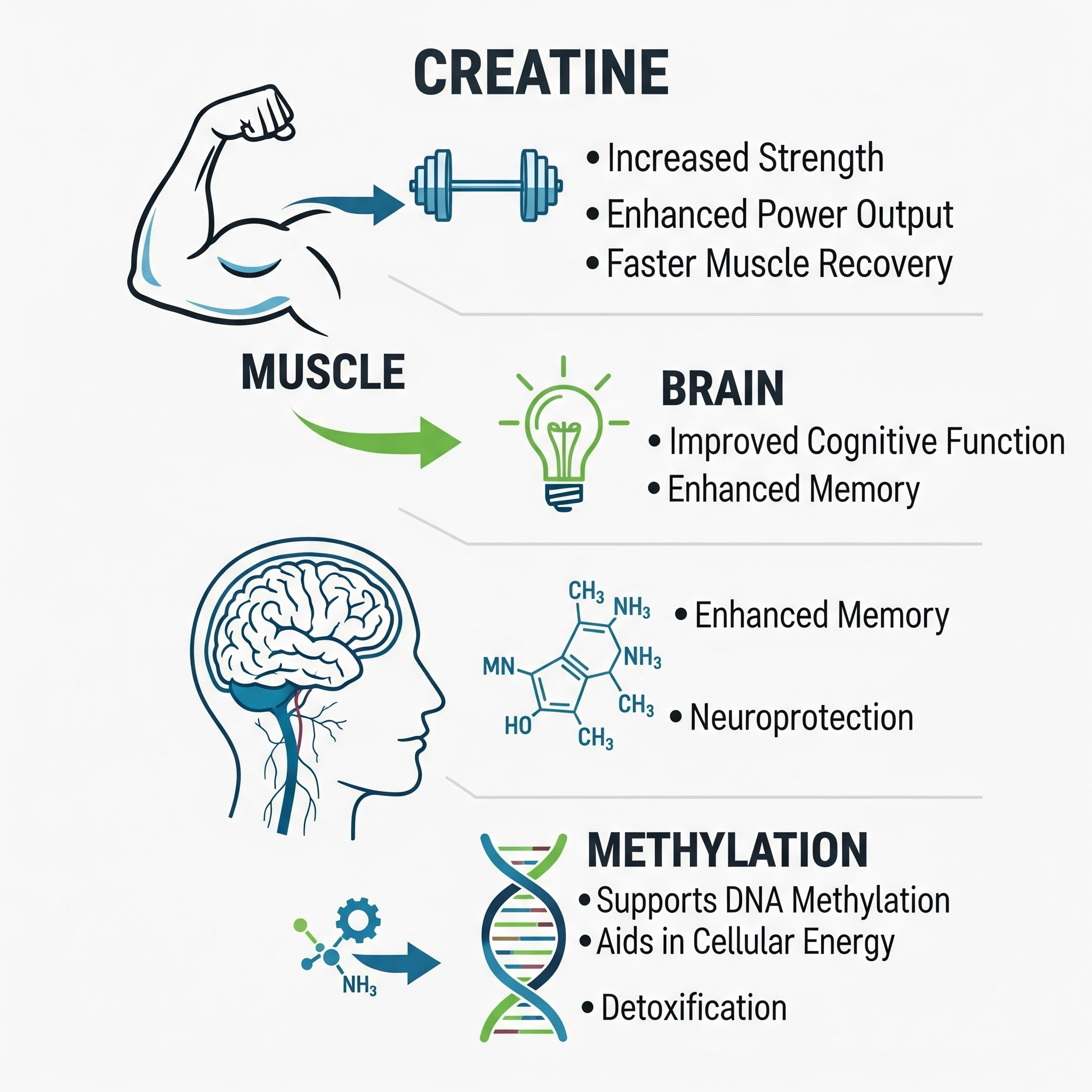
Creatine, a naturally occurring compound, has long been a staple in the athletic world for its ability to boost strength and performance. However, its benefits extend far beyond the gym, impacting crucial areas like methylation, brain health, and overall well-being.
What is Creatine?
Creatine is produced in your body by the liver, kidneys, and pancreas, and it can also be obtained through your diet, primarily from animal protein sources like chicken, cod, beef, and salmon. Roughly half of your body’s creatine comes from your diet, with the rest synthesized internally. Once produced, about 95% of creatine is delivered to your skeletal muscles, where it’s used as an energy source during high-intensity activities such as sprinting, powerlifting, or jumping. The remaining 5-10% goes to other tissues, including your heart and brain.
Creatine plays a crucial role in producing adenosine triphosphate (ATP), your body’s primary form of energy. During intense exercise, ATP stores are rapidly depleted. Creatine helps regenerate ATP, providing your muscles with more energy to perform at their peak for longer durations. Creatine and Methylation
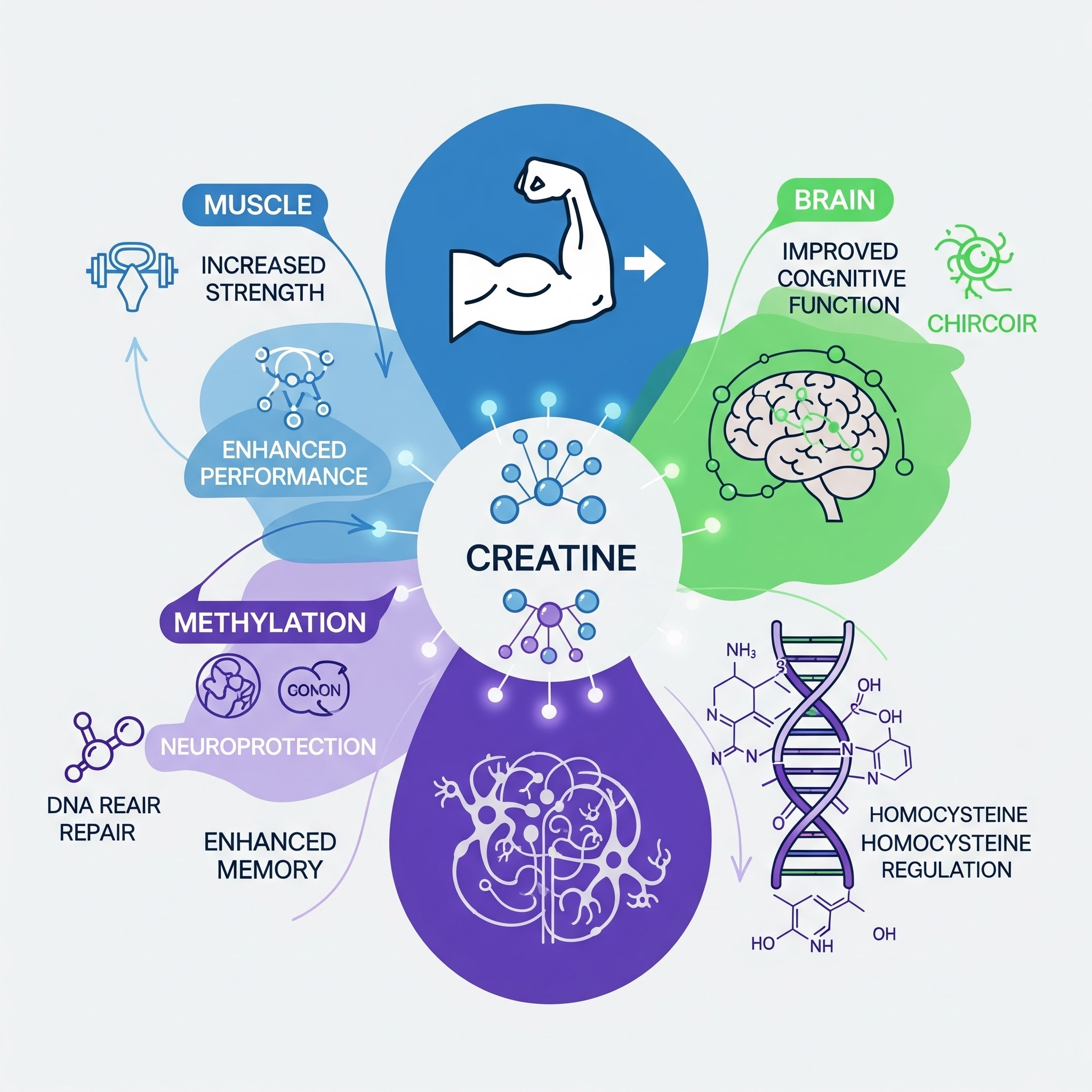
Methylation is a fundamental biochemical process involved in numerous bodily functions, including DNA repair, immune function, and detoxification. Interestingly, a significant portion of your body’s methyl groups are used to produce creatine. By supplementing with creatine, you can “spare” these methyl groups, allowing them to be utilized for other vital metabolic processes. This can be particularly beneficial for individuals who are low methylators.
Benefits for Muscle Health
Creatine’s impact on muscle health is well-documented and includes:
- Increased Muscle Mass and Strength: Creatine helps replenish ATP faster, allowing you to train harder and longer, leading to increased lean muscle mass and improved strength. Studies have shown that creatine combined with resistance training significantly increases both upper and lower body strength.
- Enhanced Exercise Performance: It improves athletic performance, especially in short-burst, high-intensity activities like sprinting, jumping, and powerlifting.
- Faster Recovery: Creatine aids in post-exercise recovery by reducing energy depletion and activating satellite cells in muscles, which help heal micro-tears in muscle fibers.
- Increased Water Content in Muscle Cells: Creatine boosts water content in muscle cells, which can stimulate protein synthesis and reduce dehydration and muscle cramps.
- Increased Anabolic Hormones: It helps increase anabolic hormones like insulin, human growth hormone (hGH), estrogen, and testosterone, which contribute to growth and tissue repair.
Benefits for Brain Health
Beyond its physical advantages, creatine is gaining recognition for its potential cognitive benefits:
- Improved Memory and Processing Speed: By improving cellular energy availability in the brain, creatine may, recall, and processing speed, especially under cognitive stress or fatigue. A 2024 meta-analysis found significant improvements in memory and processing speed with creatine supplementation.
- Reduced Mental Fatigue: Creatine can help reduce mental fatigue during demanding tasks.
- Neuroprotection: It may offer neuroprotection, safeguarding nerve cells from injury or damage. Some studies are exploring its potential in cognitive conditions like dementia.
- Mood Support: Emerging evidence suggests creatine may help improve mood and reduce symptoms of depression or anxiety.
Who Can Benefit from Creatine?
Creatine supplementation can be beneficial for various individuals, including:
- Athletes and Active Individuals: Especially those involved in high-intensity, short-duration activities.
- Older Adults: Creatine can help counter age-related muscle loss (sarcopenia) and preserve strength and cognition.
- Vegetarians and Vegans: Since creatine is primarily found in animal products, supplementation can help support muscle and cognitive function in those with plant-based diets.
- Individuals Experiencing Fatigue or Reduced Cognitive Sharpness: Creatine can enhance brain energy and cognitive resilience.
- Individuals Under Chronic Stress or Sleep Deprivation: It may offer some protection against stress-related conditions.
Dosing and Safety

For most adults, a daily dose of 3-5 grams of creatine monohydrate (the most studied form) is sufficient. Consistency in taking creatine is more important than timing.
Creatine is one of the most researched and reliable supplements available and is generally considered safe for most people. However, it’s always recommended to talk to a healthcare provider before starting any new supplement, especially if you have pre-existing conditions like kidney disease or are taking medications that affect kidney function. It’s also important to stay well-hydrated when taking creatine.
The Bottom Line
Creatine is a versatile supplement that offers a wide array of benefits, from enhancing physical performance and muscle growth to supporting brain health and methylation support. When combined with a balanced diet, adequate hydration, consistent sleep, and a personalized training routine, creatine can be a valuable addition to your wellness journey, helping you stay stronger and sharper for longer.
Stop in to purchase or click here to order online

 Getting into balance 101